Source Industrial Grade HSS Countersink for Metal Drilling, Machining, and Assembly
Compare 30 industrial grade hss countersink options from Jiangsu suppliers. Buyers can evaluate sizes from 4.3mm to 31mm, hardness levels up to 66HRC, and various shank types for metal drilling applications.
Key considerations
Products List




Comprehensive Sourcing Guide
Strategic Sourcing Guide for Industrial Grade HSS Countersink Tools
Understanding Technical Specifications and Material Variability
When sourcing industrial-grade High Speed Steel (HSS) countersink drill bits, the primary objective is to align technical specifications with the specific demands of the drilling application. The market offers a diverse array of configurations, and buyers must navigate these variations carefully to ensure tool longevity and cutting precision. The core material composition is a critical differentiator. Available options include HSS 4241, 4341, M35, M2, and M42 grades. Each of these material variants offers distinct performance characteristics regarding heat resistance and wear tolerance. M2 and M35 are common choices for general industrial applications, while M42, often associated with cobalt content, provides superior performance in harder materials.
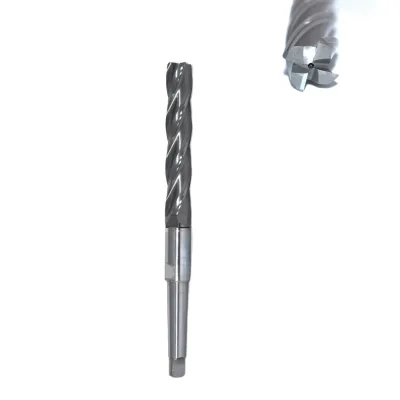
The geometric design of the countersink is equally vital. The cutting angle, or degree, is available in 60, 90, and 120-degree configurations. Selecting the correct angle depends on the material being drilled and the desired finish of the countersunk hole. A 90-degree angle is standard for many metalworking applications, while 60 and 120 degrees serve specialized purposes. The number of flutes also varies significantly, with options ranging from single and three-flute designs up to seven-flute configurations. The flute count influences chip evacuation and surface finish; more flutes generally provide a smoother cut but may reduce chip space in deep holes.
Shank design is another critical specification that determines tool compatibility with the drilling machine. Buyers must verify whether the tool requires a straight shank, tapered shank, hex shank, or triangular shank. The choice of shank affects the torque transmission and the ability of the tool to stay seated in the chuck during high-load operations. Furthermore, the manufacturing process—whether fully ground or milled—impacts the precision of the cutting edges. Fully ground tools typically offer higher accuracy and better surface finishes compared to milled alternatives. The size range for these tools is extensive, covering diameters from 4.3 mm to 40 mm, with overall lengths varying between 40 mm and 80 mm. Some listings also indicate sizes in imperial units, ranging from 1/8 inch to 3 inches, or specific metric ranges like 6 mm to 22 mm.
Compliance Standards and Certification Verification
Ensuring that the purchased countersink tools meet recognized industry standards is essential for maintaining quality control and safety in industrial operations. The sourcing landscape includes tools manufactured to various international standards, including DIN, API, AISI, and JIS. The DIN standard is frequently cited, with specific references to DIN 335 for certain product models. However, buyers should not assume that every product listed adheres to a specific standard without verification. The presence of a standard designation in a product listing is an observation that requires confirmation against the actual product documentation or a certificate of conformity.
Hardness is a key metric for compliance and performance. Industrial-grade HSS countersinks typically exhibit a hardness range of 62-66 HRC, with some specifications noting a standard of 64 HRC. This hardness level ensures the tool can withstand the friction and heat generated during drilling without rapid degradation. Buyers must verify that the hardness values provided in the product data match the actual heat treatment performed on the specific batch. The treatment process usually involves heat-treating, hardening, and tempering to achieve the desired mechanical properties.
Surface finish and coating also play a role in compliance with specific application requirements. Available surface treatments include bright finishes, titanium coatings, aluminum coatings, or uncoated surfaces. The choice of coating affects the tool's friction coefficient and heat resistance. For instance, titanium coatings often enhance the tool's ability to cut through abrasive materials. Buyers should request detailed specifications regarding the coating process to ensure it meets the operational environment's demands. Additionally, the product origin, often cited as Danyang City or Zhenjiang in Jiangsu Province, China, should be cross-referenced with the supplier's manufacturing capabilities to ensure consistency in quality control practices.
Cost Drivers and Pricing Dynamics
The pricing of industrial-grade HSS countersink tools is influenced by a complex interplay of factors, including material grade, manufacturing complexity, and order volume. The observed price range in the market spans from $0.10 to $100.00 USD, reflecting the vast difference between single-unit retail purchases and bulk industrial orders. The lower end of the price spectrum typically corresponds to standard, milled tools with basic specifications, while the higher end reflects fully ground, custom-coated, or specialized high-alloy variants.
Material cost is a primary driver of pricing. Tools made from M42 or high-cobalt HSS grades command a premium over those made from standard M2 or 4241 grades due to the higher cost of raw materials and the enhanced performance they offer. The manufacturing process also significantly impacts cost. Fully ground tools require more time and precision equipment than milled tools, resulting in a higher unit price. Customization options, such as specific flute counts, shank types, or unique coating requirements, add to the production complexity and cost.
Order volume is another critical factor. The Minimum Order Quantity (MOQ) varies widely, ranging from 1 unit to 3000 units. Buyers purchasing small quantities may face higher per-unit costs due to the fixed costs of setup and packaging. Conversely, bulk orders often benefit from economies of scale, reducing the unit price. However, buyers must balance the cost savings of bulk purchasing against inventory holding costs and the risk of obsolescence. The delivery time, typically ranging from 15 to 35 days depending on the quantity, also influences the total cost of ownership. Longer lead times may necessitate higher safety stock levels, increasing working capital requirements.
Typical Applications and Operational Context
Industrial-grade HSS countersink tools are designed for a wide range of applications, primarily centered around metal drilling and assembly processes. The primary application is the creation of conical recesses in metal components to allow screw heads to sit flush with the surface. This is critical in industries such as automotive, aerospace, and general manufacturing, where aesthetic finish and structural integrity are paramount. The tools are specifically designed for use in drilling machines, ensuring consistent and precise hole preparation.
The versatility of these tools allows them to be used in various metalworking scenarios. The 60, 90, and 120-degree angles cater to different material thicknesses and screw head types. For example, a 90-degree countersink is commonly used for standard flat-head screws in steel and aluminum, while 60-degree angles might be preferred for specific fastener types or softer materials. The number of flutes influences the application as well; single-flute tools are often used for soft materials where chip evacuation is less critical, while multi-flute tools are better suited for harder metals requiring a smoother finish.
The size range of the tools, from 4.3 mm to 40 mm in diameter, supports applications ranging from small electronic assemblies to heavy industrial machinery. The ability to source tools in both metric and imperial sizes ensures compatibility with global manufacturing standards. The packaging, which can include plastic boxes, paper boxes, plastic tubes, wooden cases, or blister packs, is designed to protect the tools during transit and storage, ensuring they remain in optimal condition until use.
Supplier Evaluation and Sourcing Strategy
Evaluating suppliers for industrial-grade HSS countersink tools requires a rigorous approach to ensure reliability and quality. Buyers should prioritize suppliers who demonstrate transparency in their manufacturing processes and provide clear documentation of their product specifications. The origin of the product, often Jiangsu Province, China, is a common factor, but buyers should verify the specific manufacturing facility's capabilities and quality control measures.
Key evaluation criteria include the supplier's ability to provide customization options, as many industrial applications require non-standard specifications. The availability of customization, such as specific flute counts, shank types, or coatings, indicates a supplier's flexibility and technical expertise. Buyers should also assess the supplier's capacity to meet lead time requirements, which typically range from 15 to 35 days. Consistent adherence to lead times is crucial for maintaining production schedules.
Quality control is another critical aspect of supplier evaluation. Buyers should request evidence of the supplier's quality management systems, including certifications and testing procedures. The supplier's ability to provide detailed product data, such as hardness ratings, material grades, and dimensional tolerances, is essential for verifying compliance with specifications. Additionally, the supplier's packaging methods should be evaluated to ensure they protect the tools from damage during shipping.
Quality Control and Long-Term Procurement Considerations
Implementing a robust quality control process is essential for mitigating risks associated with sourcing industrial-grade HSS countersink tools. Buyers should establish clear acceptance criteria based on the product specifications, including material grade, hardness, dimensions, and surface finish. Regular inspections and testing should be conducted to verify that the delivered products meet these criteria. This may involve visual inspections, dimensional measurements, and hardness testing to ensure consistency across batches.
Long-term procurement considerations involve building a sustainable relationship with suppliers who can consistently deliver high-quality products. Buyers should focus on suppliers who demonstrate a commitment to continuous improvement and innovation. This includes staying updated on the latest material technologies and manufacturing processes that can enhance tool performance and longevity. The ability to offer OEM services and accept customization requests is also a valuable indicator of a supplier's long-term viability.
Packaging and logistics play a significant role in the long-term success of procurement. The product packaging, which can range from simple plastic boxes to more robust wooden cases, must be designed to protect the tools from damage during storage and transport. Buyers should evaluate the supplier's logistics capabilities to ensure timely and secure delivery. Additionally, the supplier's ability to handle returns and replacements for defective products is crucial for maintaining operational continuity.
Comparative Analysis of Product Attributes
To facilitate informed decision-making, buyers should compare the key attributes of available HSS countersink tools. The following table summarizes the primary variations observed in the market:
| Attribute | Option A | Option B | Option C |
|---|---|---|---|
| Material Grade | HSS M2 | HSS M35 | HSS M42 |
| Cutting Angle | 60 Degree | 90 Degree | 120 Degree |
| Flute Count | Single | Three | Seven |
| Shank Type | Straight Shank | Tapered Shank | Hex Shank |
| Manufacturing | Milled | Fully Ground | Fully Ground |
| Surface Finish | Bright | Titanium Coated | Uncoated |
| Hardness | 62-66 HRC | 62-66 HRC | 62-66 HRC |
| Standard | DIN | DIN, AISI | DIN, JIS |
| Size Range | 4.3-40 mm | 6-22 mm | 1/8-3 Inch |
This comparison highlights the diversity of options available and underscores the importance of selecting the right combination of attributes for specific applications. Buyers should carefully evaluate each attribute against their operational requirements to ensure optimal performance and cost-effectiveness. By understanding these variations, buyers can make informed decisions that align with their strategic sourcing goals.
FAQs
What material grades are available for industrial grade hss countersink tools?
Available material grades include HSS 4241, 4341, M35, M2, and M42. These variants offer distinct performance characteristics regarding heat resistance and wear tolerance for different metal drilling applications.
Which cutting angles can be selected for industrial grade hss countersink bits?
Cutting angles are available in 60, 90, and 120 degrees. The correct angle depends on the specific material being drilled and the desired finish of the countersunk hole for the assembly process.
Can I find industrial grade hss countersink tools with specific shank types?
Yes, shank options include straight, tapered, hex, and triangular designs. The choice of shank affects torque transmission and ensures the tool stays seated in the chuck during high-load operations.
What is the typical delivery time for industrial grade hss countersink orders?
Delivery time ranges from 15 to 35 days according to quantity. Longer lead times may necessitate higher safety stock levels to maintain consistent production schedules for industrial operations.
How are industrial grade hss countersink tools typically packaged for shipment?
Packaging options include plastic boxes, paper boxes, plastic tubes, wooden cases, and blister packs. These methods are designed to protect the tools from damage during transit and storage.
What size ranges are offered for industrial grade hss countersink drill bits?
Sizes range from 4.3 mm to 40 mm in diameter with lengths of 40 to 80 mm. Some listings also provide imperial sizes from 1/8 inch to 3 inches for global compatibility.
Which manufacturing processes are used for industrial grade hss countersink tools?
Tools are available via fully ground or milled manufacturing processes. Fully ground tools typically offer higher accuracy and better surface finishes compared to milled alternatives for precision applications.